Good wedding lighting does something quiet and powerful. It tells your guests where to look and how to feel, and nobody notices the equipment that makes it happen. A flat, overlit room reads like a conference. The same room lit in layers reads like the most important night of your life. This guide walks through how event lighting actually works, so you can talk to your planner and your lighting crew like you already speak the language.
Start With the Room, Not the Fixtures
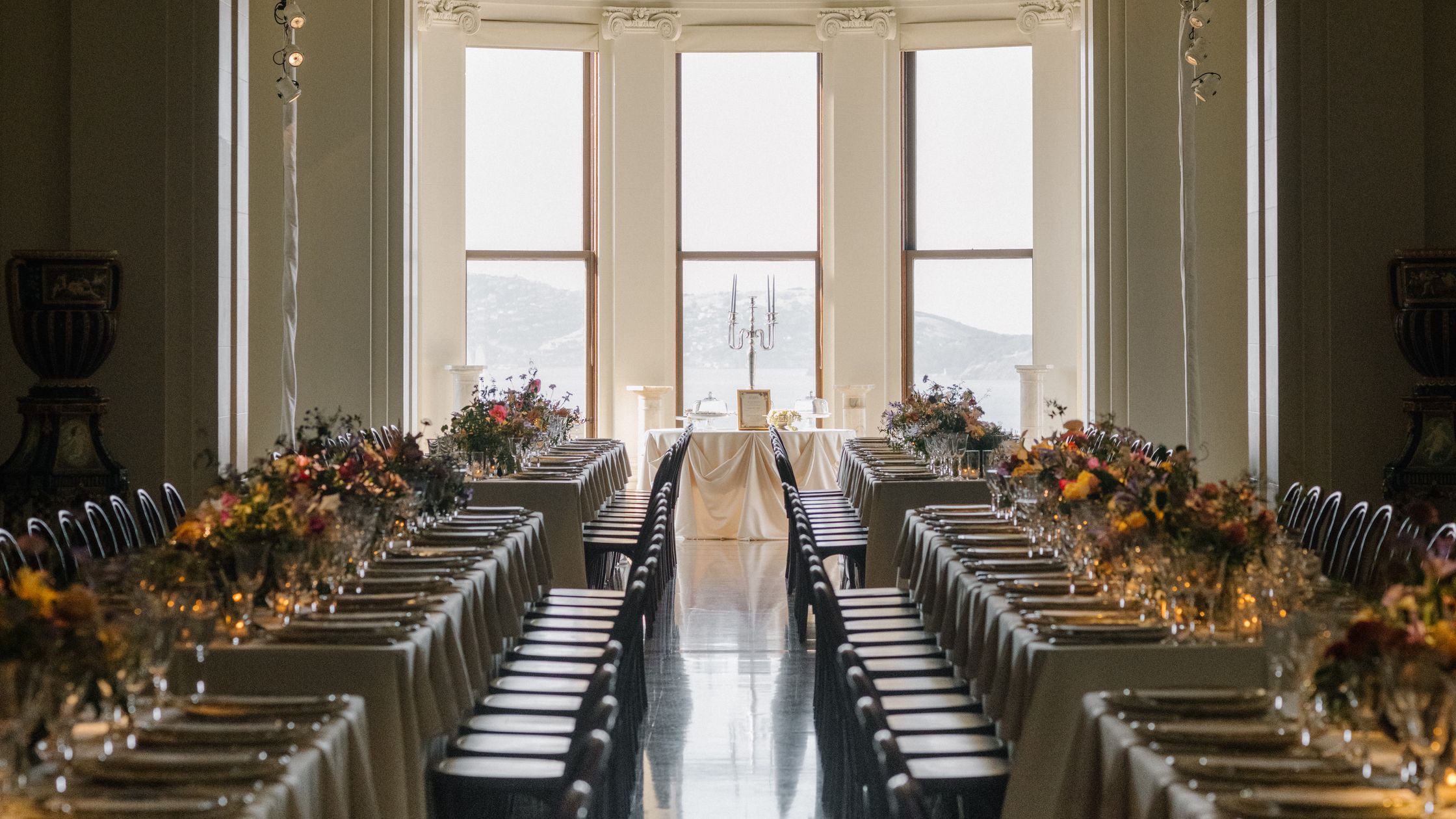
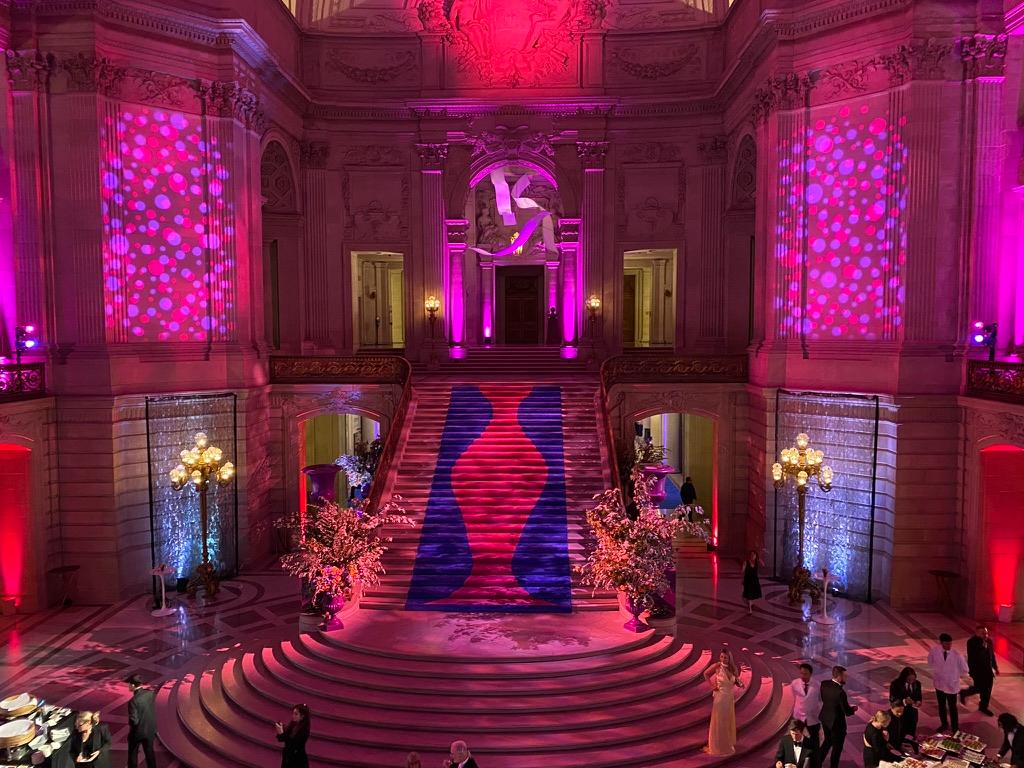
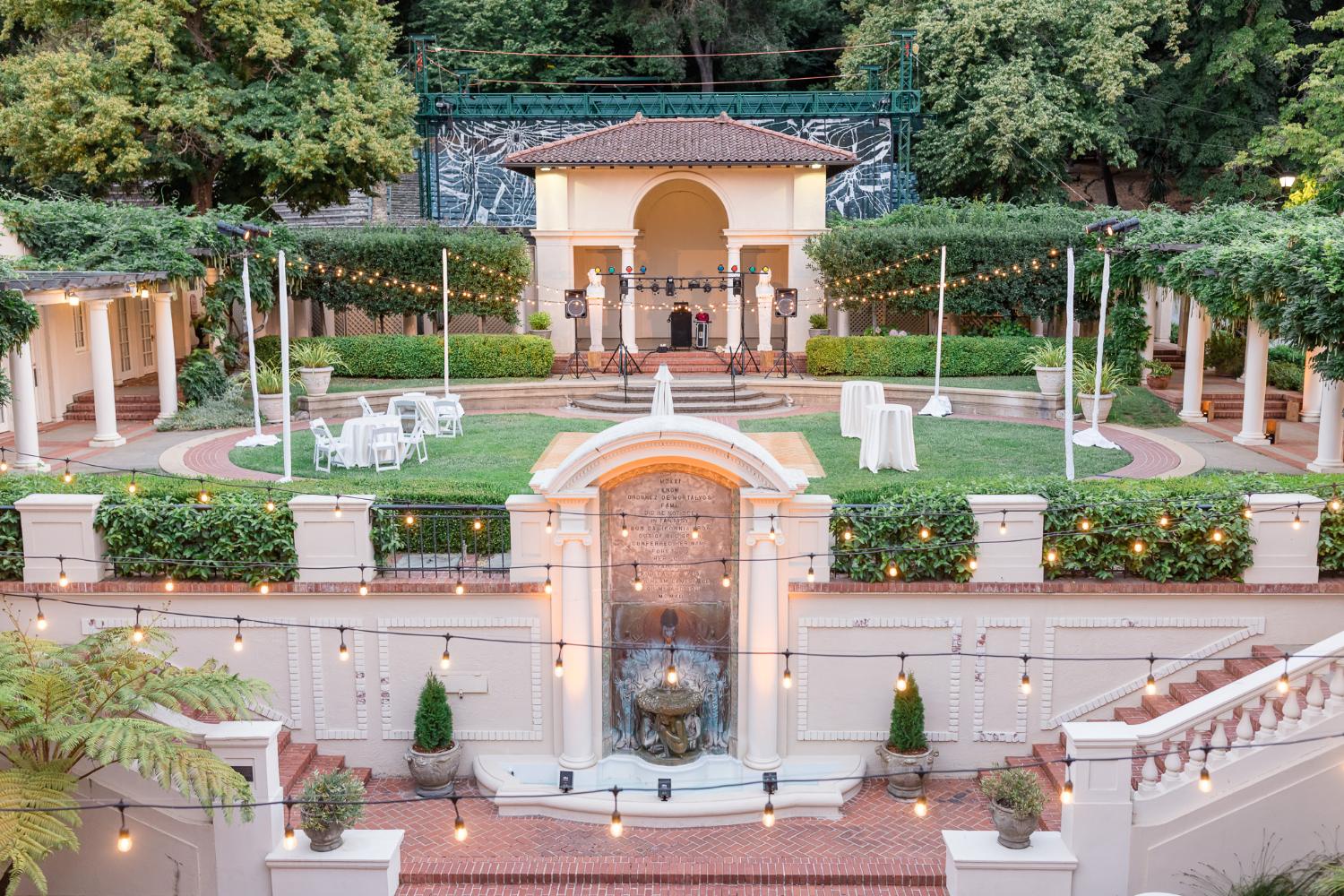
Before anyone talks gear, look at the space. A historic ballroom with tall ceilings and ornate plaster wants light pushed up the walls to show off the architecture. A clear-top tent in Wine Country wants warmth pulled down low, because once the sky goes dark the tent turns into a black ceiling. A garden ceremony at golden hour may need almost nothing until the sun drops, and then it needs a plan. The room decides the lighting, which is why we walk every venue before we design a single fixture.
The Three Layers That Do the Work
Most wedding lighting comes down to three layers, and you rarely need more than that.
- Uplighting. Fixtures set on the floor against the walls, washing color or warm white upward. Spaced every eight to ten feet, they give a blank ballroom depth. This is the layer that changes the whole mood for the least money.
- Pin spots. Tight beams aimed straight down at each centerpiece, the cake, and the sweetheart table. Pin spots are why the flowers in the photos look lit from within. Without them, candlelit tables photograph as dark blobs.
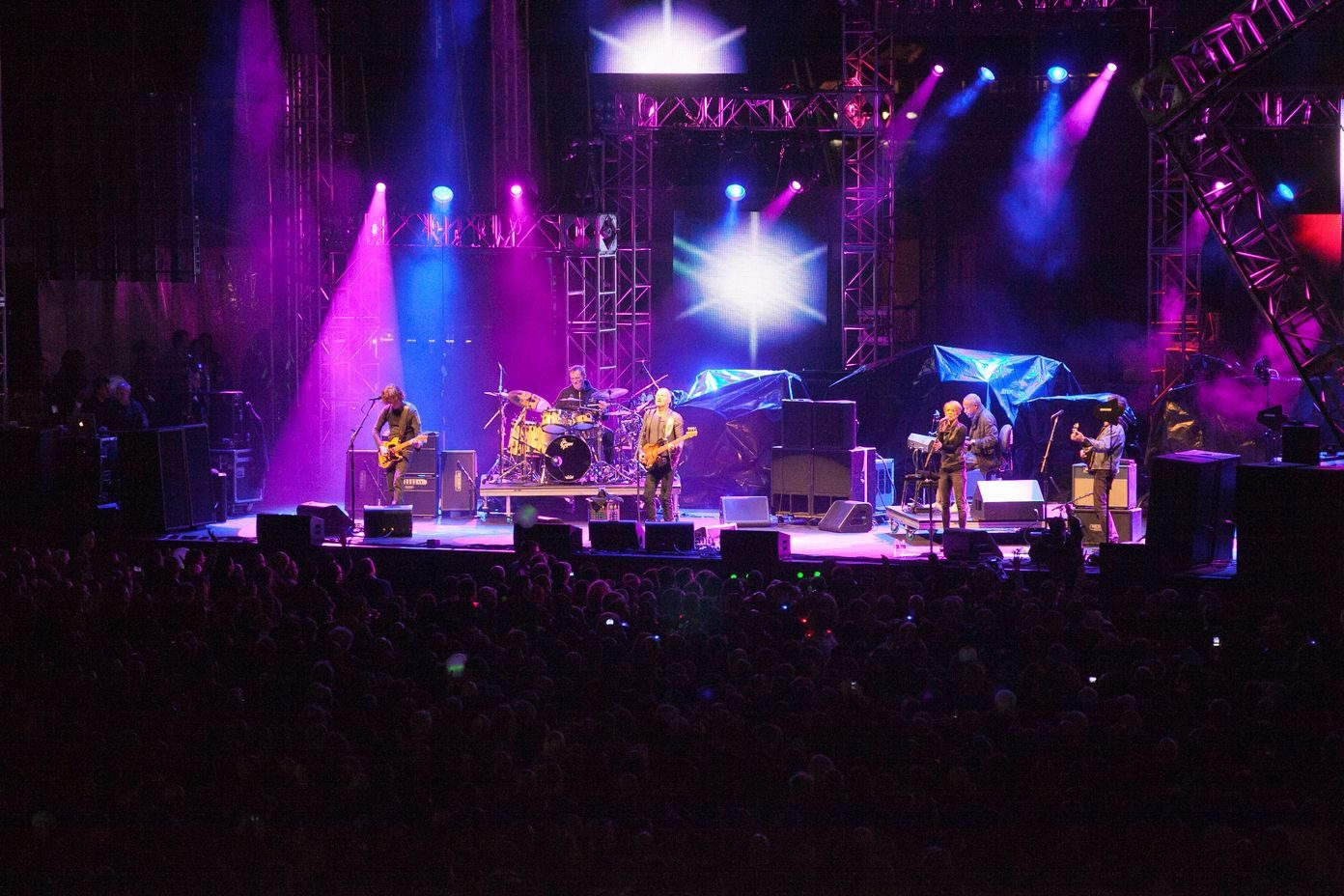
- Dance floor. A separate system, because a dance floor at nine has a different job than dinner at seven. Moving lights, a wash of color, sometimes a simple monogram. This is the only layer that should ever feel like a show.
Warm or Cool, and Why It Matters
Color temperature is measured in Kelvin, and it is the one setting that most changes how a room feels. Warm white sits around 2700K, the color of candlelight. Daylight sits up near 5600K, closer to a hospital hallway. Weddings live in the warm end. We default to warm white for dinner and bring color in on the dance floor, because warm light flatters skin, food, and flowers, and cool light does the opposite. If a fixture cannot warm as it dims, it does not belong at the dinner tables.
Timing the Room From Ceremony to Last Dance
A wedding is not one lighting look. It is four or five, and the transitions matter as much as the looks themselves. The ceremony stays bright and natural so faces read clearly in photos. Cocktails soften. Dinner drops warm and low, carried by pin spots and candlelight. Toasts come up a touch so the room can find the person speaking. Then the light shifts to the dance floor and the night changes character. A good crew runs those cues live, so the room moves with your timeline instead of fighting it.
What to Ask Before You Book
- Have you worked in my venue, and what did you learn there?
- Can every fixture dim, and does the dinner lighting warm as it dims?
- Does the lighting run on battery, or does it need power and cable runs?
- Who from your team is on site during the event if something needs adjusting?
- When do you load in and strike, and does the venue allow those hours?
The Short Version
Lighting is the least visible part of your wedding and one of the most felt. Done right, no one mentions it, and every photo looks like the room glowed on its own. Impact has lit Bay Area weddings, from San Francisco City Hall to Wine Country tents, since 1990, with an in-house crew that walks your venue before designing a thing. Tell us where you are getting married and we will tell you what the room needs.